Sunday, June 22, 2014

Head too heavy? Grow wings!

Say Hello to a Horned Dinosaur With 'Wings' on Its Head
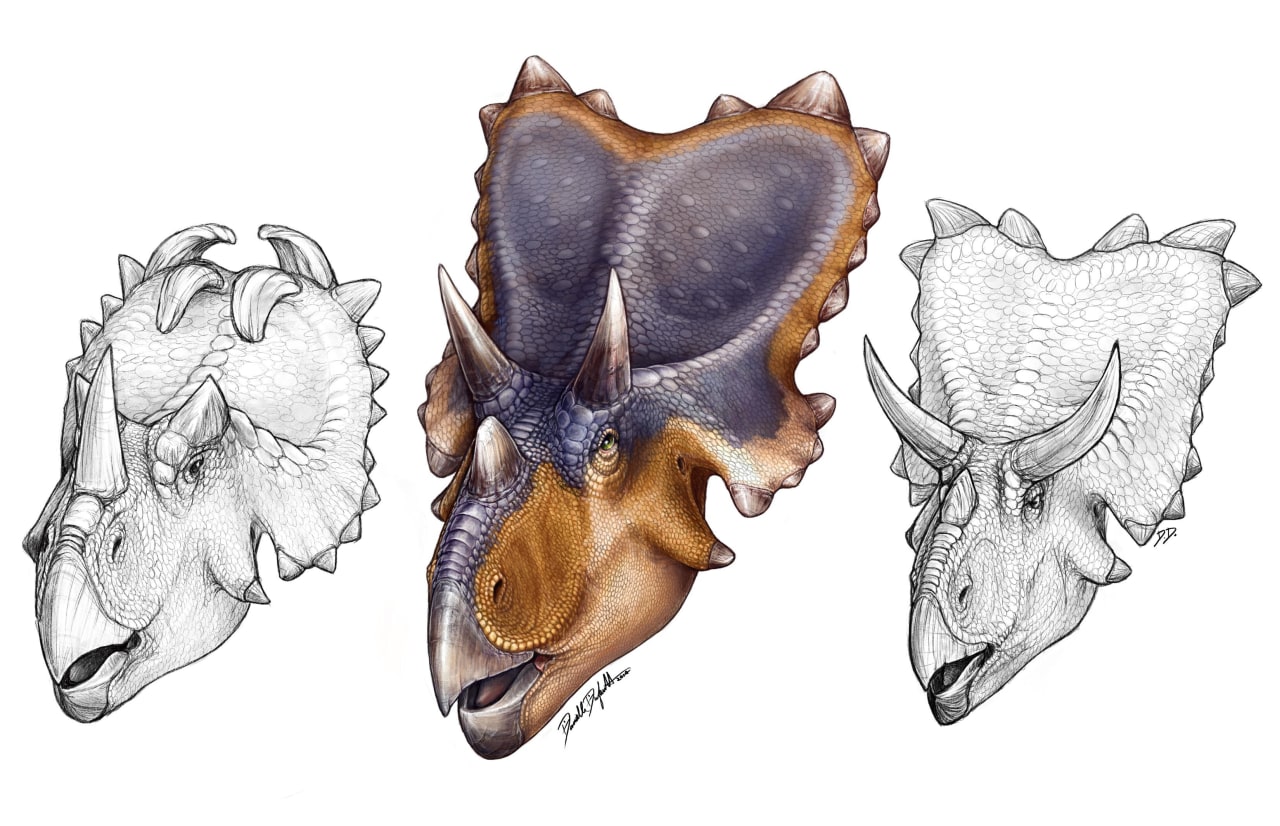
The latest name in dinosaurs is Mercuriceratops gemini — a bizarre horned dinosaur that had a frill so wide it looked the wings on the Greek god Mercury's helmet. 

At least that's what the scientists who named the beast thought. That's how they came up with the genus name, which is derived from the Greek for "Mercury horned-face." The 77 million-year-old plant-eater is described and classified in a paper published online by the journal Naturwissenschaften. 

The "gemini" refers to the fact that almost identical twin specimens of the species' skull were found in north central Montana's Judith River Formation and Alberta's Dinosaur Provincial Park. 

This year's paleontology grads in China

This is Every New Paleontologist from China's Top Research School

This is Xue Yifan. This is a group photo.  
China is home to some of the richest fossil deposits in the world, and has been the source of many of the exciting recent discoveries in paleontology. But the country is having trouble attracting new paleontology students. This "group photo of one" represents the entire paleontology graduating class at China's #1 research university, which has only graduated one new paleontology student each year for four years straight. The photo's appearance this week on Chinese social networking site Renren has sparked a mini-debate in China about the value of "searching for Godzilla" as a career, and whether paleontology is as worthwhile a pursuit as more popular degrees like business or economics.

If you're curious, the pictured "lonely paleontologist" is named Xue Yifan. She did her thesis on sexual dimorphism and growth rates in Keichousaurus (a Triassic marine reptile commonly found in China) and is now headed to the USA.

Wednesday, June 18, 2014

10 Scientific Ideas That Scientists Wish You Would Stop Misusing

#9 "One issue I often run into is that the public lacks an understanding of geologic timescales. Anything prehistoric gets compressed in peoples' minds, and folks think that 20,000 years ago we had drastically different species, or even dinosaurs. It doesn't help that those little tubes of plastic toy dinosaurs often include cave people or mammoths."

BTW io9's comments are the best.
Read more here

Sunday, June 15, 2014

Before the -saurs, giant fish named Big Mouth.

Did Super-Sized Animals Live Long Before Dinosaurs?

It's generally believed that Earth's earliest animals were not very big, but discovery of a huge new fish that lived around 423 million years ago has scientists rethinking what life was like close to 200 million years before the first dinosaurs emerged.

The fish, named Big Mouth Blunt Tooth (Megamastax amblyodus), is described in the latest issue of Scientific Reports. For its time, the toothy and lobe-finned fish was in the number one spot on the food chain.

"At 1 meter (3.3 feet) in length or greater, it was vastly larger than any other animal," lead author Brian Choo told Discovery News, adding that Big Mouth was "likely the earliest vertebrate (backboned) apex predator in the fossil record."

Read more about Big Mouth here

Friday, June 13, 2014

I will call him Mini Me

 'Pocket' Sauropod Dinosaur Reveals More about Giant's Evolution

Sauropods were the largest animals to ever walk across the face of the Earth. At about 40 meters long and 100 tons in weight with their long necks and small heads, these creatures grazed on vegetation millions of years ago. Now, researchers have uncovered the fossil remains of a "pocket" sauropod, which reveal a bit more about the evolution of this large dinosaur.

The new "tiny" sauropod is only six meters long and weighs just .8 tons. Discovered at a quarry in northern Germany, the fossils are some of the best sauropod remains ever discovered.

In the Late Jurassic about 150 million years ago, Europe was an archipelago, and most reptile fossils from the continent were those of marine species. The few dinosaur remains discovered would have been washed into the sea from islands including the small sauropod, called Europasaurus. It would have lived on one of these islands, which explains why it evolved as a dwarf island species.

Moar RAWR here

Wednesday, June 11, 2014

Guess he wasn't doing the backstroke.

Paddle Tracks On Ancient Seafloor Reveal Ancient Reptile's Swimming Style


"Trackways" on an ancient seabed provide insight into how ancient marine reptiles called nothosaurs propelled themselves through the water.

These animals were the top predators during the Mesozoic, which took place between 66 and 252 million years ago, a Bristol University news release reported.

The nothosaurs were "voracious semi-aquatic hunters with elongate bodies and paddle-like limbs," the news release reported.


Researchers have long-wondered if the animals rowed back and forth with their limbs or "flew" under water like a penguin.

The team looked at an ancient seabed from China that contained 10 to 50 swooping lines that came in pairs believed to have been left behind by the ancient animal.

The finding suggests the nothasaur moved by rowing its forelimbs in unison.

Article here