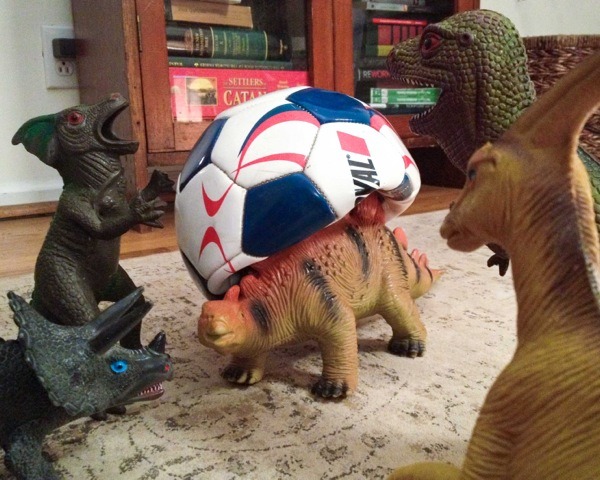
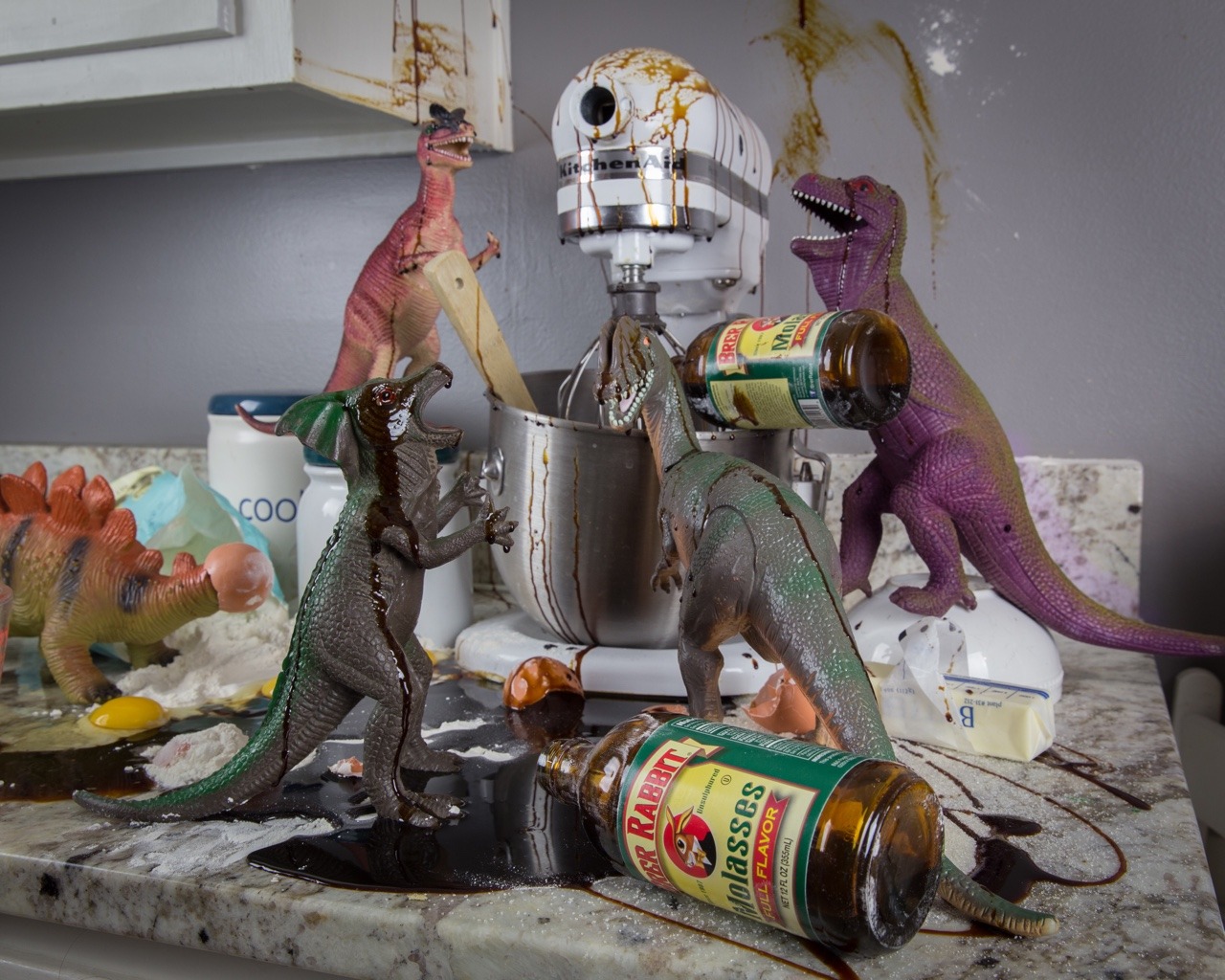
BERKELEY, CA—Citing compelling fossil evidence that the prehistoric
species died suddenly and treacherously, paleontologists at the
University of California, Berkeley announced Monday that dinosaurs were
almost certainly killed by someone they trusted. “Our findings indicate
that someone, we don’t know who, spent at least 150 million years
gaining the confidence of dinosaurs before abruptly betraying them and
taking their lives near the end of the Cretaceous Era,” said lead
researcher Professor Janet Bower, adding that dinosaurs likely had an
innately innocent and unsuspecting nature that this individual could
exploit to get within easy striking distance. “The distribution and
condition of dinosaur bones strongly suggests that these creatures died
without a struggle and that they had been caught totally off-guard by an
individual they naively considered a friend. Those that had time to
regard their killer were no doubt absolutely shocked.” Bower went on to
suggest that if the mightiest creatures to walk the face of the earth
could be wiped out by letting someone get close to them, humanity could
too.
Full article here
Friday, November 28, 2014
Wednesday, November 26, 2014
Smithsonian's National Museum of Natural History Presents THE LAST AMERICAN DINOSAURS
Two enormous dinosaurs-Triceratops and Tyrannosaurus rex-reign over the National Museum of Natural History's new exhibition: "The Last American Dinosaurs: Discovering a Lost World." The 5,200-square-foot exhibition opens Nov. 25 on the second floor of the museum. It tells the story of non-avian dinosaurs' final years in western North America through an extraordinary diversity of animals and plants discovered in the fossil-rich layers of the Hell Creek Formation in North Dakota, South Dakota and Montana. The exhibition will remain on view until the completion of the museum's newly renovated dinosaur and fossil hall, scheduled for opening in 2019.
"This exhibition gives visitors a chance to explore the world in which dinosaurs lived between 66 and 68 million years ago, just before an enormous asteroid impact suddenly altered life on our planet forever," said Hans-Dieter Sues, curator of vertebrate paleontology and lead curator of the exhibition. "Examining long-gone ecosystems helps scientists understand how the world is changing today and what the consequences of a mass extinction could be in the future."
Set in North America's western interior, "Last American Dinosaurs" reveals what life was like for dinosaurs and other animals thriving during the Late Cretaceous Period. It features "Hatcher," a giant, plant-eating Triceratops, and the museum's nearly 14-foot-tall cast of a T. rex known as "Stan," two of the most imposing dinosaurs in the museum's collections. The skulls of an adultEdmontosaurus and an infant and yearling Triceratops also highlight the show, along with other fossil displays, murals of ancient environments, a video presentation showing behind-the-scene collaborations between scientists and paleo-artists working on the exhibit and an arcade-style game, "How to Become a Fossil." The murals give visitors a window into the past and feature plants and animals from the lush, diverse Hell Creek ecosystem.
Full article here
Monday, November 24, 2014
Reassembling dinosaur skeletons requires skill
Anthony Maltese is curator at the Rocky Mountain Dinosaur Resource Center in Woodland Park, Colo., and author of the RMDRC Paleo Lab blog ( http://rmdrc.blogspot.com), where he writes about excavating, molding, casting and mounting fossilized dinosaur skeletons.
Q. What are some scientific advancements in recovering and assembling fossil skeletons?
A. In many ways some techniques haven’t changed since the 1870s. We’re still using our eyeballs to find the fossils eroding out of the ground, excavating with hand tools and using plaster and burlap jackets to get them back to the lab. On the other hand, we’ve used CT and laser-scanning technology to digitize fossils and send information across the world. Dinosaurs are almost never found 100 percent complete, but it’s rarely appropriate to display them with missing bits. Say we have a dinosaur missing its right leg, but we have a perfect left leg from the specimen. Three-dimensional scanners and printers help us make mirror image parts, and even scaled-up (or) scaled-down ones so that we can more accurately (and easily) restore skeletons. It sure beats sculpting from scratch.
Q. Is the rate at which new fossils are being found slowing?
A. I think fossils are being discovered at a higher rate than several decades ago. Many museums have active field and lab programs, and many rock formations that were poorly studied in the past are getting scientific attention with spectacular results. We see this with the weird dinosaurs we are now digging up in the Judith River Formation of Montana, with many fossils belonging to entirely new species. Even without digging up new things, better understanding of the science enables us to discover new things about specimens that have resided in museum collections for a century.
Q. What do you wish people understood about dinosaur fossils?
A. For the most part, I’m just happy that dinosaurs make people curious and that they can approach paleontologists to answer their questions. If there was one thing that would make our job a bit easier it would be that while there are a lot of round rocks in this world, nearly none of them are dinosaur eggs. It’s probably the most common question we get – and the one where the visitor most frequently won’t believe our diagnosis. That being said, if you think you have found a fossil, it never hurts to send some clear photographs (with some sort of scale, a coin will even work) to your local natural history museum. Many great discoveries have been made this way.
Q. We can’t talk fossils without asking about dinosaur cloning. Will it ever be possible?
A. I don’t have a crystal ball, however I don’t see it happening in the near future. On the other hand, some more recently extinct species could possibly be resurrected given time and technology. What I wouldn’t give to see a Carolina parakeet, passenger pigeon or Tasmanian tiger! Even talking about the possibility of it happening is exciting to me.
Read more here: http://www.newsobserver.com/2014/11/23/4336058/skills-involved-in-reassembling.html?sp=/99/102/#storylink=cpy
Volunteer to put dinos together in Wyoming
Full Q&A here
Wednesday, November 19, 2014
Pixar rewrites 'Good Dinosaur' story
Pixar's orphan movie "The Good Dinosaur" has a new parent — and a new story.First-time
feature director Peter Sohn, an artist at the studio in Emeryville,
Calif., since 2000, unofficially took over the film a few months after
Pixar executives removed its first director, Bob Peterson, amid creative
concerns in the summer of 2013.
Over the last year, Sohn has been quietly streamlining the story, a buddy comedy about a teenage dinosaur and a human boy, in preparation for a November 2015 release.
"The heart of the story remains the same," Sohn said, in an interview last week. "It's always been about this young dinosaur growing up. But the world itself has changed a lot. Nature has become a character."
Director changes are relatively common in animation in general, where multi-year production schedules can test a person's creative and managerial stamina, and at Pixar in particular, where "The Good Dinosaur" was the fourth of the studio's last eight films to see a swap.
But the midstream move caused a cascade of headaches for Pixar and for its parent company, Walt Disney Co., which pushed "The Good Dinosaur's" release date back 18 months from May of 2014.
The timing change left Pixar without a 2014 film, bumped Andrew Stanton's anticipated "Finding Nemo" sequel, "Finding Dory," to 2016 and caused the company to lay off 50 employees.
"For Pixar it was a dramatic event," said Jim Morris, the studio's general manager and executive vice president of production. "It was tough on the company. Most studios would have said, 'The movie's fine. It's not bad.' And it wasn't bad; it just wasn't great. We wanted to have a great movie."
At the time, Pixar's leadership, including studio president Ed Catmull, felt Peterson was creatively stuck on the film and was proving too slow to make important story decisions. Sohn had been serving as Peterson's co-director, a position akin to that of a deputy at Pixar.
As in Peterson's version, the film still posits that an asteroid never hit the Earth and the dinosaurs never went extinct; a teenage Apatosaurus named Arlo takes a wild, young human boy named Spot as a pet.
Sohn has jettisoned some of Peterson's signature ideas, such as modeling the dinosaurs on Amish farmers, and added new elements, including treating nature as the film's antagonist.
"When Bob was taken off, I was supporting the film as best I could," Sohn said. "It felt like, this child, this film still needs to be raised. It was just about how to take care of the thing at that time. ... Trying to keep the original vision of this film intact and trying to plus it as well."
In taking over the film, Sohn, 37, becomes part of a new generation of directors succeeding Stanton, Pete Docter and "Toy Story 3" director Lee Unkrich, all of whom are in their late 40s.
Born in the Bronx to Korean immigrants, Sohn got a summer job working on Brad Bird's 1999 animated cult classic "Iron Giant" while studying animation at the California Institute of the Arts.
See the full article here
Over the last year, Sohn has been quietly streamlining the story, a buddy comedy about a teenage dinosaur and a human boy, in preparation for a November 2015 release.
"The heart of the story remains the same," Sohn said, in an interview last week. "It's always been about this young dinosaur growing up. But the world itself has changed a lot. Nature has become a character."
Director changes are relatively common in animation in general, where multi-year production schedules can test a person's creative and managerial stamina, and at Pixar in particular, where "The Good Dinosaur" was the fourth of the studio's last eight films to see a swap.
But the midstream move caused a cascade of headaches for Pixar and for its parent company, Walt Disney Co., which pushed "The Good Dinosaur's" release date back 18 months from May of 2014.
The timing change left Pixar without a 2014 film, bumped Andrew Stanton's anticipated "Finding Nemo" sequel, "Finding Dory," to 2016 and caused the company to lay off 50 employees.
"For Pixar it was a dramatic event," said Jim Morris, the studio's general manager and executive vice president of production. "It was tough on the company. Most studios would have said, 'The movie's fine. It's not bad.' And it wasn't bad; it just wasn't great. We wanted to have a great movie."
At the time, Pixar's leadership, including studio president Ed Catmull, felt Peterson was creatively stuck on the film and was proving too slow to make important story decisions. Sohn had been serving as Peterson's co-director, a position akin to that of a deputy at Pixar.
As in Peterson's version, the film still posits that an asteroid never hit the Earth and the dinosaurs never went extinct; a teenage Apatosaurus named Arlo takes a wild, young human boy named Spot as a pet.
Sohn has jettisoned some of Peterson's signature ideas, such as modeling the dinosaurs on Amish farmers, and added new elements, including treating nature as the film's antagonist.
"When Bob was taken off, I was supporting the film as best I could," Sohn said. "It felt like, this child, this film still needs to be raised. It was just about how to take care of the thing at that time. ... Trying to keep the original vision of this film intact and trying to plus it as well."
In taking over the film, Sohn, 37, becomes part of a new generation of directors succeeding Stanton, Pete Docter and "Toy Story 3" director Lee Unkrich, all of whom are in their late 40s.
Born in the Bronx to Korean immigrants, Sohn got a summer job working on Brad Bird's 1999 animated cult classic "Iron Giant" while studying animation at the California Institute of the Arts.
See the full article here
Sunday, November 16, 2014
Saturday, November 15, 2014
Friday, November 14, 2014
Subscribe to:
Posts (Atom)